

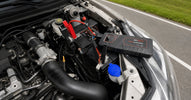
How to Jump Start a Car Safely: Complete Guide With Jumper Cables and Portable Jump Starters
, par SAFEMATE
, par SAFEMATE
Written by the SAFEMATE Technical Team
SAFEMATE has built automotive emergency power equipment for 27 years. This guide comes from charger and jump starter specs, basic roadside safety rules, and the questions our support team hears most from real customers with a dead batteries!
Quick answer: You can jump start a car two ways: with jumper cables and a second car, or with a portable jump starter and no second car at all. With cables, connect red to the dead battery's positive terminal, red to the good battery's positive terminal, black to the good battery's negative terminal, then black to bare metal on the dead car. Start the working car first. Wait a minute. Then try to start the dead car. With a portable jump starter, clamp it onto the dead battery, turn it on, and start the engine — no second car needed. Below, we cover both methods step by step, the mistakes that cause the most damage, and how to pick the right tool for your situation.
Before you hook up anything, take thirty seconds to check the battery is really the problem. A jump won't help if the real issue is a bad alternator, a blown fuse, or a broken starter.
If the battery is swollen, cracked, or leaking, or you smell rotten eggs near it, don't try to jump it. A damaged battery can be dangerous to touch. Have a professional check it instead.

What you need depends on which method you use.
With jumper cables, you need:
With a portable jump starter, you need:
Either way, a few minutes of prep will make the job safer. Turn off the engine and all electronics in the dead car. Put both cars in Park (or Neutral with the parking brake on, for manual cars). Make sure you can see the battery terminals clearly. If you see corrosion — a white, blue, or green crust — clean it off with a wire brush or cloth first. A bad connection is one of the top reasons a jump attempt fails.
This is the classic method. It needs a second car with a working battery.
Connect positive first, remove negative first. This order is standard advice from roadside safety groups and car makers. It's worth remembering by heart.

If there's no second car around — an empty driveway, a parking garage at night, or a spot where help won't arrive soon — a portable jump starter solves the same problem without anyone else's help.
Since the unit has its own power built in, this method works anywhere, at any time, without needing to flag someone down. That's the main reason more drivers now keep one in the trunk, alongside or instead of cables.

Even people who've done this before make mistakes. These are the ones most likely to cause sparks, blow a fuse, or damage your car's electronics:
Neither tool wins outright. They solve the same problem in different ways, and the right choice depends on your situation.
| Factor | Jumper Cables | Portable Jump Starter |
|---|---|---|
| Needs a second car | Yes | No |
| Works alone, anywhere | No | Yes |
| How hard to set up | Medium — four clamps, order matters | Easy — two clamps, then power on |
| Built-in safety features | Depends on the cable set | Most units include reverse-polarity and spark protection |
| Speed to get running | Slower — donor car must idle first | Usually faster, often just seconds |
| Extra features | None | Many also charge phones, light up as a flashlight, or fill tires |
| Cost over time | Cheap, one-time buy | Costs more upfront, but no need for another driver |
If a second car is usually nearby and you're comfortable with the connection steps, jumper cables still work well and cost little. If you often drive alone, park where finding a donor car isn't a sure thing, or just want fewer things to worry about in an emergency, a portable jump starter removes the biggest limit of cables: needing someone else's car in the first place.
Many drivers keep both — cables as a cheap backup, and a properly sized portable jump starter as the main tool for a dead battery.

Not all jump starters are the same size, and picking one too small for your engine is the top reason people end up disappointed. A few specs matter more than the marketing text:
Our full buying guide sorts amp recommendations by engine size and vehicle type, if you want to pick a size exactly rather than guess.

Getting the engine running is only half the job. What you do in the next 20 to 30 minutes decides whether you'll be dealing with the same problem tomorrow.
One dead battery is usually just bad luck — lights left on, a cold night, or a car sitting too long. Repeated dead batteries are a pattern worth fixing.
Do I connect the red or black clamp first?
Always connect red (positive) first. With cables, that's red to the dead battery, then red to the good battery, before either black clamp goes on. This order lowers the risk of a short or a spark near the battery, where gas may be present.
Which clamp do I remove first?
Remove black (negative) first, in the reverse order from how you connected everything. This is true for both jumper cables and portable jump starters.
How long should I drive after jump-starting my car?
Plan on at least 20 to 30 minutes of driving, ideally at steady speed rather than stop-and-go traffic. This gives the alternator a real chance to recharge the battery. Idling in place does much less.
Can I jump-start a car in the rain?
Yes. A 12-volt car battery doesn't carry enough voltage for rain or general wetness to make the job more dangerous than doing it on a dry day. Normal care still applies — avoid standing water right at the terminals and keep the clamps from touching.
Is it safe to jump-start a hybrid or electric vehicle?
Most hybrids and EVs have a normal 12-volt battery that can be jump-started much like a gas car, though where it sits varies by make and model — check the owner's manual first. You usually can't use one EV to jump another EV, since the 12-volt system isn't built for that job. A gas-powered car or a portable jump starter works better.
Why won't my car start even after a jump?
If the lights and radio work but the engine still won't crank, or you hear fast clicking with no start at all, the problem may be a failing starter, alternator, or a battery too worn out to hold a jump. If the car fails to start again even after a good jump, the battery likely needs to be replaced — it's usually not a technique problem.
Can I use a portable jump starter and jumper cables together?
Not on the same battery at the same time, but they work well as a pair. Keep cables as a free backup, and rely on a portable jump starter as your main tool since it doesn't need a second car.
If jumper cables are your backup plan, a properly sized portable jump starter removes the biggest problem in a dead-battery emergency: needing another car and another driver willing to help. A good unit gets you started in seconds, works alone at any hour, and comes with safety features — reverse-polarity protection, spark-proof clamps, short-circuit protection — that basic cables usually don't offer.
SAFEMATE builds jump starters sized by engine size, from small cars up to heavy-duty trucks and diesel engines, so you're not guessing whether a unit can actually start your car. Our buying guide walks through sizing by vehicle type, if you want help picking the right amp rating for your car.
Shop SAFEMATE Portable Jump Starters →

This article was written and checked by SAFEMATE's technical team. SAFEMATE has built automotive emergency power equipment — jump starters, jumper cables, and portable power packs — for 27 years. The safety steps, connection order, and advice above come from basic roadside safety sources, general jump starter specs, and the questions our support team hears most from real customers. Jump starter specs and jumper cable ratings vary by product, so always check the exact numbers in your product's manual.
Have a question this guide didn't answer? Contact our support team →
Power up your journey.


