

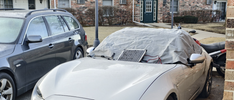
¿Puede un cargador solar de mantenimiento evitar que la batería de un coche se descargue?
, por SAFEMATE
, por SAFEMATE
Un coche que permanece parado durante días o semanas puede perder lentamente la carga de su batería, incluso cuando todo parece estar apagado. Un cargador solar de goteo puede ayudar con esto. Pero solo funciona en las condiciones adecuadas y no es lo mismo que un arrancador portátil. Un cargador solar es un ayudante lento y constante para una batería que simplemente está ahí parada. No está diseñado para rescatar una batería que ya se ha descargado por completo.
Es posible que necesite un cargador solar de goteo si tiene una batería de 12V en buen estado que permanece sin usar durante semanas, su coche está aparcado en un lugar que recibe luz solar real y no tiene una forma sencilla de conectar un cargador normal. Busque un modelo resistente a la intemperie con un controlador de carga (una pequeña pieza que gestiona cuánta energía fluye hacia la batería), soporte para el tipo de batería adecuado, suficiente potencia (vatios) y un enchufe que permanezca conectado incluso cuando el coche está apagado. No espere que arranque su coche ni que arregle una batería que ya está fallando.
Un cargador solar de goteo utiliza un pequeño panel solar para convertir la luz solar en electricidad. Envía un goteo lento y constante de energía a su batería. En los coches, la gente suele llamar a esto mantenedor de batería solar, que es en realidad un nombre más preciso para lo que hace.
Incluso cuando su coche está aparcado y apagado, pequeñas cosas siguen utilizando un poco de energía. El reloj, el sistema de alarma, el acceso sin llave y los ordenadores del coche consumen una pequeña cantidad de electricidad todo el tiempo. La escuela técnica de automoción UTI explica que este consumo de energía lento y continuo se denomina drenaje parasitario, y es una parte normal del funcionamiento de los coches modernos en pequeñas cantidades (fuente). Tras semanas aparcado, esto se acumula.
Existen dos tipos de cargadores solares. Un cargador antiguo, no regulado, sigue enviando energía tanto si la batería la necesita como si no, lo que puede sobrecargarla con el tiempo. Un mantenedor inteligente utiliza un controlador para ralentizar o detener la carga una vez que la batería está llena. Algunos mantenedores incluyen este tipo de protección. Algunos más baratos no, por lo que vale la pena comprobarlo antes de comprar.

Antes de nada, es útil saber qué tipo de problema está intentando resolver realmente.
Piense que la batería de su coche puede tener dos niveles diferentes de problemas. Una batería que está ligeramente baja todavía tiene algo de carga. Solo necesita un pequeño reabastecimiento con el tiempo. Una batería que está totalmente descargada o plana, casi no tiene energía. No hará girar el motor en absoluto.
Un cargador solar de goteo está diseñado para la primera situación. Es una forma lenta y constante de prevención, como mantener un pequeño goteo constante para que la batería nunca llegue a estar vacía. No está construido para rescatar una batería que ya está descargada y no le ayudará a arrancar su coche en este momento si está atascado.
Para esa segunda situación —una batería que ya está muerta y necesita moverse— la herramienta adecuada es un arrancador portátil, como un arrancador SAFEMATE del tamaño adecuado. Proporciona una ráfaga corta y potente de corriente para hacer girar el motor, lo cual es un trabajo completamente diferente a lo que hace un cargador solar.
Tener ambas herramientas en mente es la forma más sencilla de pensar en esta guía: un mantenedor solar para la prevención lenta y un arrancador para un rescate rápido.
Probablemente no lo necesite si conduce su coche con regularidad y la batería ha funcionado bien. La conducción regular permite que el alternador (la pieza que recarga la batería mientras el motor está en marcha) mantenga la batería cargada por sí sola.
Un mantenedor solar se vuelve realmente útil cuando se cumplen estas tres condiciones:
| Situación | ¿Es adecuado un mantenedor solar? | Por qué |
|---|---|---|
| Coche clásico o de temporada almacenado en el exterior | Generalmente sí | Compensa el drenaje lento durante largos periodos sin uso |
| Batería de motocicleta, ATV, cortacésped o generador | A menudo sí | Estas baterías pequeñas pueden estar sin usar durante meses |
| Batería de barco o autocaravana en almacenamiento exterior | A menudo sí | La energía solar funciona bien donde no hay una toma de corriente cerca |
| Coche que conduce todos los días | Generalmente no es necesario | La conducción habitual debería mantener cargada una batería sana |
| Coche aparcado en un garaje oscuro | No | Un cargador enchufable funciona mejor sin luz solar directa |
| Batería totalmente descargada | No | Un panel solar pequeño puede tardar muchos días, o puede que no la cargue en absoluto |
| Batería que se descarga de nuevo cada pocos días | Repare primero la causa | Esto apunta a un problema de batería, alternador o cableado; no es algo que un cargador solar pueda solucionar |
Antes de comprar nada, haga una comprobación rápida. Desenchufe las cosas que no necesite, como una cámara de salpicadero siempre encendida. Asegúrese de que las puertas y las luces se apaguen por completo. Y si su batería es vieja, hágala probar. Un cargador solar nunca debe utilizarse para ocultar un problema real.
Si su coche pasa aparcado dos semanas o más y recibe varias horas de sol directo, un mantenedor solar puede ser realmente conveniente. Si permanece en el interior, permanece a la sombra la mayor parte del día o necesita estar listo sin importar el clima, un mantenedor enchufable normal suele ser la mejor opción.

Un mantenedor solar puede reemplazar una pequeña cantidad de energía cada día. Eso es realmente útil para mantener una batería sana cargada durante el almacenamiento. Con suficiente sol y tiempo, incluso puede recuperar lentamente una batería ligeramente baja.
Esto es aproximadamente lo que sucede en tiempo real: una batería que está solo un poco baja podría recuperarse después de unos cuantos días soleados con un panel pequeño. Una batería totalmente muerta podría tardar una semana o más en recuperarse de esta manera, si es que se carga —que es exactamente la razón por la que los cargadores solares no son una solución para una emergencia de batería muerta.
Esto es lo que no puede hacer de manera fiable:
Si su motor no arranca ahora mismo, un cargador solar no es la herramienta para ese momento. Consulte la guía de SAFEMATE sobre cómo arrancar un coche de forma segura o, si la batería parece totalmente muerta, nuestra guía sobre qué hacer con una batería de coche totalmente muerta trata exactamente esta situación, incluyendo cómo el aparcamiento a largo plazo es una de las causas más comunes.

El mejor cargador solar de goteo es el que coincide con su batería, su lugar de estacionamiento y cómo planea conectarlo, no solo el que tiene el número más grande en la caja.
La mayoría de los coches utilizan una batería de plomo-ácido de 12V, pero eso abarca algunos tipos diferentes: inundada, AGM y gel son las más comunes. Algunas motocicletas, barcos y vehículos especiales utilizan baterías de litio en su lugar.
Compruebe que el manual del cargador indique claramente el voltaje de la batería que admite, el tipo de batería con la que funciona y el rango de temperatura en el que es seguro usarlo. No asuma que un cargador etiquetado como "12V" funciona con cualquier tipo de batería de 12V; el patrón de carga puede ser diferente para cada tipo.
La verdadera pregunta no es "¿cuántos vatios son mejores?", sino si el panel puede devolver más energía cada día de la que su batería está perdiendo.
| Tamaño del panel | Bueno para | Cuidado con |
|---|---|---|
| 2–5W | Mantenimiento muy ligero para baterías pequeñas con sol fuerte | Poco margen para días nublados o consumos de energía adicionales |
| 5–10W | Mantenimiento general para la mayoría de motocicletas y coches | El lugar donde lo coloque y la calidad del controlador siguen siendo muy importantes |
| 10–20W | Baterías más grandes, meses de invierno o mayor consumo en reposo | Un buen controlador se vuelve aún más importante aquí |
| 20W y más | Baterías más grandes o recargar realmente (no solo mantener) | Trátelo como una instalación solar pequeña y dimensione el cableado correctamente |
Los mantenedores solares pequeños de 5-10 vatios suelen costar entre 20 y 40 dólares. Los paneles más grandes con un controlador incorporado más robusto suelen costar más, dependiendo del tamaño y las características. Estos son rangos de mercado aproximados, no una promesa para ningún producto específico.
Un controlador de carga gestiona cuánta energía fluye del panel a la batería. Para cualquier cosa que planee dejar conectada a largo plazo, busque uno que ralentice o detenga la carga una vez que la batería esté llena, proteja contra una conexión invertida y evite que la energía fluya hacia atrás fuera de la batería por la noche.
Algunos paneles muy pequeños omiten esto y se conectan directamente a la batería. La baja potencia por sí sola no hace que eso sea seguro para todas las baterías. Un controlador adecuado elimina las conjeturas.
No elija una conexión solo porque el enchufe encaje. Compruebe si realmente permanece alimentado con el coche apagado y si el manual de usuario permite la carga a través de él.
Un panel pequeño colocado en el exterior a pleno sol puede superar a un panel más grande colocado plano detrás de un cristal tintado. Antes de elegir un tamaño, piense exactamente dónde va a vivir.
Busque una forma que se ajuste a su punto de montaje sin bloquear su visión, un cable lo suficientemente largo para llegar sin convertirse en un riesgo de tropiezo o pellizco, un montaje seguro para que no pueda soltarse y una resistencia real a la intemperie si se va a quedar en el exterior.

| Herramienta | Trabajo principal | ¿Funciona con batería muerta? | Necesita |
|---|---|---|---|
| Cargador solar de goteo | Prevenir el drenaje lento con el tiempo | Generalmente no es práctico | Luz solar directa |
| Mantenedor inteligente enchufable | Mantener una batería almacenada cargada | Algunos modelos pueden recuperar lentamente una batería baja | Una toma de CA |
| Arrancador portátil (como SAFEMATE) | Proporcionar una ráfaga de energía de arranque de emergencia | Sí, para muchas baterías descargadas, cuando están bien dimensionadas | Su propia carga, realizada con antelación |
Si mantiene un arrancador cerca para emergencias, necesita su propio programa de carga por separado; un mantenedor solar de batería de coche no está construido para cargar la batería de litio dentro de un arrancador.
Siga siempre primero el manual de su coche y el manual del cargador. Estos pasos prevalecen sobre cualquier consejo general.
¿Puede un cargador solar de mantenimiento cargar completamente una batería agotada y arrancar mi coche?
No, no de forma realista. Un cargador solar de mantenimiento suministra una pequeña cantidad de energía lentamente con el tiempo. Una batería completamente descargada necesita una gran cantidad de energía de forma rápida, y un panel solar pequeño simplemente no puede suministrarla, especialmente si necesita el coche de inmediato. Para esa situación, un arrancador portátil, como un Arrancador SAFEMATE del tamaño adecuado, es la herramienta correcta; proporciona una descarga de corriente rápida y potente diseñada específicamente para arrancar una batería agotada, en lugar de suministrar energía lentamente durante días.
¿Puedo dejar conectado un cargador solar de mantenimiento todo el tiempo?
Solo si está diseñado específicamente para ello, es compatible con el tipo de su batería, incluye una protección de carga real y siempre que el manual de su vehículo lo permita. Revíselo de vez en cuando. No deje conectado indefinidamente un cable dañado, un panel suelto o un cargador no regulado.
¿Qué tamaño de cargador solar de mantenimiento necesito para la batería de un coche?
Para la mayoría de las baterías de coche en buen estado, un cargador regulado de 5 a 10 vatios es un punto de partida razonable. Elija uno mayor si su batería es más grande, si su coche tiene un consumo de energía en espera más alto o si recibe luz solar limitada en invierno. El tamaño adecuado es el más pequeño que, de manera realista, devuelva más energía al día de la que pierde su batería.
¿Funciona un cargador solar de mantenimiento a través del parabrisas?
Puede funcionar, pero espere menos potencia. El tinte, el vidrio, el ángulo, la suciedad y la sombra pueden reducir significativamente la salida real. Un panel detrás de un cristal está más protegido contra el clima, pero puede proporcionar notablemente menos energía que el mismo panel expuesto directamente al sol en el exterior.
¿Puede un cargador solar sobrecargar la batería de un coche?
Uno no regulado o mal ajustado podría hacerlo. Un controlador de carga real reduce ese riesgo gestionando la energía a medida que la batería se llena. No confíe simplemente en las palabras "cargador de mantenimiento"; compruebe que realmente tenga un control de carga adecuado y que sea compatible con el tipo de su batería.
¿Funciona un cargador solar de mantenimiento cuando el coche está apagado?
Sí, siempre que tenga una conexión estable a la batería. Una conexión directa a la batería o una configuración aprobada con terminales de anillo generalmente mantiene esa conexión activa. Es posible que una toma de accesorios pierda energía por completo al apagar el coche, así que compruebe eso primero.
¿Es mejor un cargador solar de 10W que uno de 5W?
Le proporciona más potencia y mayor margen para los días nublados, pero "más grande" no significa automáticamente "mejor". La calidad del controlador, la compatibilidad con la batería y la ubicación del panel importan tanto como la potencia. Un panel más grande pero no regulado puede resultar peor que uno más pequeño con un buen control.
¿Puedo usar un cargador solar de mantenimiento en una batería AGM o de litio?
Solo si el cargador indica específicamente que es compatible con ese tipo de batería y si su patrón de carga coincide con lo recomendado por el fabricante de la batería. No utilice un ajuste estándar de plomo-ácido en una batería de litio y verifique específicamente los límites de carga a baja temperatura para baterías de litio.
Vale la pena adquirir un cargador solar de mantenimiento si desea conservar una batería sana en un vehículo que permanece estacionado en el exterior sin fácil acceso a un enchufe. Busque un modelo regulado que sea compatible con su batería, que genere energía real diaria donde aparcará habitualmente y que se conecte mediante un método aprobado por el manual de su vehículo.
Si su batería ya está agotada, se descarga constantemente cada pocos días o el vehículo se guarda en un garaje oscuro, un cargador solar no es la herramienta adecuada. Diagnostique la causa real, utilice un cargador adecuado o mantenga un arrancador portátil del tamaño correcto a mano para cuando necesite ponerse en marcha de inmediato. La herramienta adecuada depende de si su problema es de mantenimiento o una emergencia que debe resolverse al momento.
Comprar Arrancadores Portátiles SAFEMATE →
¿Tiene alguna pregunta que esta guía no haya resuelto? Contacte a nuestro equipo de soporte →
Arrancador de baterías SAFEMATE


