

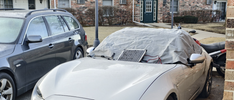
Can a Solar Trickle Charger Prevent a Dead Car Battery?
, by SAFEMATE
, by SAFEMATE
A car that sits for days or weeks can slowly lose battery power, even when everything looks switched off. A solar trickle charger can help with that. But it only works in the right conditions, and it's not the same thing as a portable jump starter. A solar charger is a slow, steady helper for a battery that's just sitting around. It's not built to rescue a battery that's already gone flat.
You may need a solar trickle charger if a healthy 12V battery sits unused for weeks, your car is parked somewhere that gets real sunlight, and you don't have an easy way to plug in a normal charger. Look for a weather-resistant model with a charge controller (a small part that manages how much power flows into the battery), the right battery type support, enough wattage, and a plug that stays connected even when the car is off. Don't expect it to jump-start your car or fix a battery that's already failing.
A solar trickle charger uses a small solar panel to turn sunlight into electricity. It sends a slow, steady trickle of power into your battery. In cars, people often call this a solar battery maintainer, which is really a more accurate name for what it does.
Even when your car is parked and switched off, small things still use a little power. The clock, the alarm system, the keyless entry, and the car's computers all sip a tiny bit of electricity all the time. Automotive trade school UTI explains that this slow, ongoing power use is called parasitic drain, and it's a normal part of how modern cars work in small amounts (source). Over weeks of sitting parked, it adds up.
There are two kinds of solar chargers. An old-style, unregulated charger just keeps sending power whether the battery needs it or not, which can eventually overcharge it. A smart maintainer uses a controller to slow down or stop charging once the battery is full. Some maintainers include this kind of protection. Some cheaper ones don't, so it's worth checking before you buy.

Before anything else, it helps to know what kind of problem you're actually trying to solve.
Think of your car battery as having two different levels of trouble. A battery that's mildly low still has some charge left. It just needs a little top-up over time. A battery that's deeply discharged, or flat, has almost nothing left. It won't crank the engine at all.
A solar trickle charger is built for the first situation. It's a slow, steady form of prevention, like keeping a small drip going so the battery never gets all the way down to empty. It is not built to rescue a battery that's already flat, and it won't help you start your car right now if you're stuck.
For that second situation — a battery that's already dead and you need to get moving — the right tool is a portable jump starter, like a properly sized SAFEMATE jump starter. It delivers a short, powerful burst of current to crank the engine, which is a completely different job from what a solar charger does.
Keeping both tools in mind is the simplest way to think about this guide: a solar maintainer for slow prevention, and a jump starter for a fast rescue.
You probably don't need one if you drive your car regularly and the battery has been fine. Regular driving lets your alternator (the part that recharges the battery while the engine runs) keep the battery topped off on its own.
A solar maintainer becomes genuinely useful when all three of these are true:
| Situation | Good fit for a solar maintainer? | Why |
|---|---|---|
| Seasonal or classic car stored outside | Usually yes | It offsets slow drain during long gaps between drives |
| Motorcycle, ATV, lawn tractor, or generator battery | Often yes | These small batteries can sit unused for months at a time |
| Boat or RV battery in outdoor storage | Often yes | Solar works well where there's no power outlet nearby |
| Car you drive every day | Usually not needed | Regular driving should keep a healthy battery charged |
| Car parked in a dark garage | No | A plug-in charger works better without direct sunlight |
| Battery that's already fully dead | No | A small solar panel may take many days, or may not charge it at all |
| Battery that dies again every few days | Fix the cause first | This points to a battery, alternator, or wiring problem — not something a solar charger can fix |
Before you buy anything, do a quick check. Unplug things you don't need, like an always-on dash cam. Make sure your doors and lights actually turn all the way off. And if your battery is older, get it tested. A solar charger should never be used to hide a real problem.
If your car sits parked for two weeks or more and gets several hours of direct sun, a solar maintainer can be genuinely convenient. If it sits inside, stays shaded most of the day, or needs to be ready no matter the weather, a regular plug-in maintainer is usually the better choice.

A solar maintainer can replace a small amount of energy every day. That's genuinely useful for keeping a healthy battery topped off during storage. Given enough sun and time, it may even slowly bring a mildly low battery back up.
Here's roughly what that looks like in real time: a battery that's just a little low might come back up after a few good sunny days with a small panel. A battery that's fully dead could take a week or more to recover this way, if it charges at all — which is exactly why solar chargers aren't a fix for a dead battery emergency.
Here's what it can't reliably do:
If your engine won't crank right now, a solar charger isn't the tool for that moment. See SAFEMATE's guide on how to jump start a car safely, or if the battery seems totally dead, our guide on what to do with a completely dead battery covers exactly this situation, including how long-term parking is one of the most common causes.

The best solar trickle charger is the one that matches your battery, your parking spot, and how you plan to connect it — not just the one with the biggest number on the box.
Most cars use a 12V lead-acid battery, but that covers a few different types: flooded, AGM, and gel are common ones. Some motorcycles, boats, and specialty vehicles use lithium batteries instead.
Check that the charger's manual clearly lists the battery voltage it supports, the battery type it works with, and the temperature range it's safe to use in. Don't assume a charger labeled "12V" works with every kind of 12V battery — the charging pattern can be different for each type.
The real question isn't "how many watts is best?" It's whether the panel can put back more power each day than your battery is losing.
| Panel size | Good for | Watch out for |
|---|---|---|
| 2–5W | Very light upkeep for small batteries in strong sun | Little room for cloudy days or extra power draws |
| 5–10W | General upkeep for most motorcycles and cars | Where you place it, and controller quality, still matter a lot |
| 10–20W | Larger batteries, winter months, or higher standby drain | A good controller becomes even more important here |
| 20W and up | Bigger batteries, or actually recharging (not just maintaining) | Treat it like a small solar setup, and size the wiring properly |
Small 5–10 watt solar maintainers typically cost somewhere around $20 to $40. Larger panels with a stronger built-in controller usually cost more, depending on size and features. These are rough market ranges, not a promise for any specific product.
A charge controller manages how much power flows from the panel into the battery. For anything you plan to leave connected long-term, look for one that slows or stops charging once the battery is full, protects against a reversed connection, and stops power from flowing backward out of the battery at night.
Some very small panels skip this and connect directly to the battery. Low wattage alone doesn't make that safe for every battery. A proper controller takes the guesswork out of it.
Don't pick a connection just because the plug happens to fit. Check whether it actually stays powered with the car off, and whether your owner's manual allows charging through it.
A small panel sitting outside in full sun can outperform a bigger panel lying flat behind tinted glass. Before you pick a size, think about exactly where it's going to live.
Look for a shape that fits your mounting spot without blocking your view, a cable long enough to reach without becoming a tripping or pinch hazard, secure mounting so it can't fly loose, and real weather resistance if it's staying outside.

| Tool | Main Job | Works on a Dead Battery? | Needs |
|---|---|---|---|
| Solar trickle charger | Prevent slow drain over time | Usually not practical | Direct sunlight |
| Plug-in smart maintainer | Keep a stored battery topped off | Some models can slowly recover a low battery | An AC outlet |
| Portable jump starter (like SAFEMATE) | Deliver an emergency burst of starting power | Yes, for many discharged batteries, when properly sized | Its own charge, done ahead of time |
If you keep a jump starter around for emergencies, it needs its own separate charging schedule — a solar car-battery maintainer isn't built to charge the lithium battery inside a jump starter.
Always follow your car's manual and the charger's manual first. These steps override any general advice.
Can a solar trickle charger fully charge a dead battery and start my car?
No, not realistically. A solar trickle charger sends a slow, small amount of power over time. A battery that's completely dead needs a large amount of energy fast, and a small solar panel simply can't deliver that, especially if you need the car running right now. For that situation, a portable jump starter, like a properly sized SAFEMATE Jump Starter, is the right tool — it delivers a quick, powerful burst of current built specifically to crank a dead battery, instead of slowly trickling power in over days.
Can I leave a solar trickle charger connected all the time?
Only if it's actually built for that, matches your battery type, and includes real charge protection — and only if your car's manual allows it. Check on it now and then. Don't leave a damaged cable, a loose panel, or an unregulated charger connected indefinitely.
What size solar trickle charger do I need for a car battery?
For most healthy car batteries, a regulated 5–10 watt charger is a reasonable starting point. Go bigger if your battery is larger, your car has more standby power draw, or you get limited winter sunlight. The right size is the smallest one that realistically puts back more power each day than your battery loses.
Does a solar trickle charger work through a windshield?
It can, but expect less power. Tint, glass, angle, dirt, and shade can all cut down real output by a lot. A panel behind glass is more protected from weather, but it may deliver noticeably less energy than the same panel sitting outside in direct sun.
Can a solar charger overcharge a car battery?
An unregulated or poorly matched one can. A real charge controller lowers that risk by managing the power as the battery fills up. Don't just trust the words "trickle charger" — check that it actually has proper charge control and supports your battery type.
Will a solar trickle charger work when the car is off?
Yes, as long as it has a steady connection to the battery. A direct battery connection or an approved ring-terminal setup usually keeps that connection live. An accessory socket might lose power completely when the car is off, so check that first.
Is a 10W solar charger better than a 5W one?
It gives you more power and more room for cloudy days, but bigger isn't automatically better. The controller quality, battery match, and where you place the panel all matter just as much. A larger unregulated panel can actually be worse than a smaller, well-controlled one.
Can I use a solar trickle charger on an AGM or lithium battery?
Only if the charger specifically says it supports that battery type, and its charging pattern matches what the battery maker recommends. Don't use a regular lead-acid setting on a lithium battery, and check the low-temperature charging limits for lithium batteries specifically.
A solar trickle charger is worth getting if you're maintaining a healthy battery in a car that sits outside without easy access to a plug. Look for a regulated model that matches your battery, produces real daily power where you'll actually park it, and connects through a way your car's manual approves.
If your battery is already dead, keeps dying every few days, or lives in a dark garage, a solar charger isn't the right tool. Diagnose the real cause, use a proper charger, or keep a correctly sized portable jump starter on hand for when you need to get moving right away. The right tool depends on whether your problem is maintenance, or an emergency that needs solving right now.
Shop SAFEMATE Portable Jump Starters →
Have a question this guide didn't answer? Contact our support team →
SAFEMATE Jump Starter


